
UNEP Circularity Platform
The UNEP Circularity Platform is a learning and knowledge hub developed by the United Nations Environment Programme to support the global transition toward circular economic models.
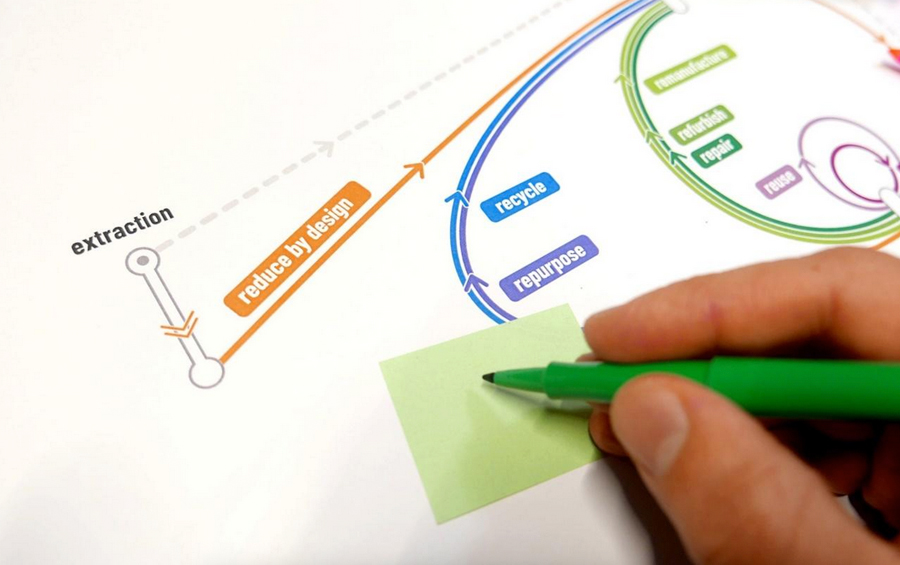
It provides a comprehensive introduction to circularity concepts, particularly from a policy and systems-change perspective. The platform explains the role of circular economy in achieving sustainable consumption and production (SCP) patterns and details the 7Rs framework: Refuse, Reduce, Reuse, Repair, Refurbish, Remanufacture, and Recycle. It also offers visuals such as value-retention loops, practical guidance for implementation, and links to UNEP reports and global circular initiatives. The platform is designed to support countries, institutions, and industries in building strategies for circularity aligned with international sustainability goals.
Source: UN Environment Programme (UNEP)
European Circular economy network platform
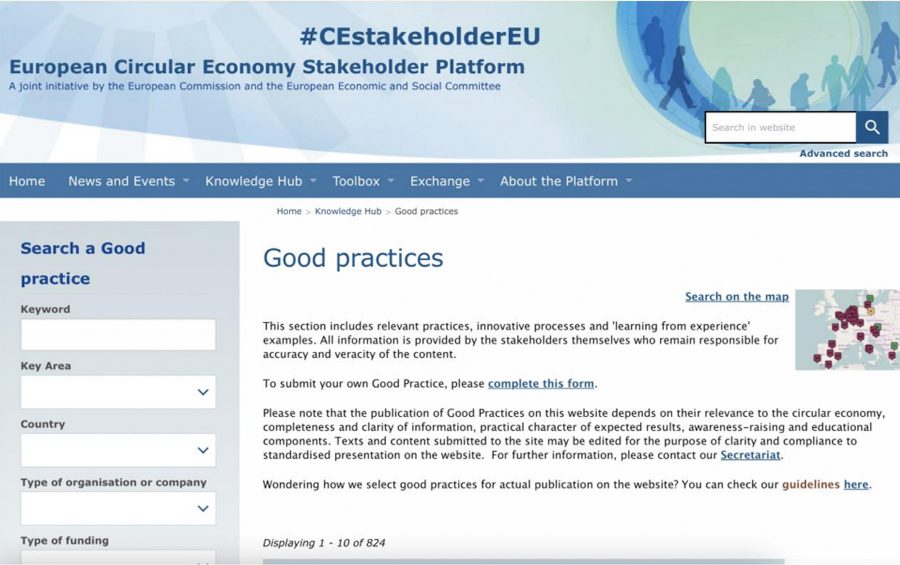
The European Circular Economy Stakeholder Platform offers a rich collection of real-world good practices to inspire and guide SMEs in their transition to a circular economy.
These examples, submitted by businesses, public bodies, and organizations across Europe, showcase innovative approaches in areas such as waste reduction, eco-design, resource efficiency, product life extension, and circular business models.
Each case includes key information on objectives, actions taken, results achieved, and lessons learned — making it a valuable tool for SMEs seeking practical, tested ideas to implement in their own operations.
The platform also enables users to filter practices by sector, country, and circular economy strategy, making it easier to find relevant examples.
The platform has been developed under: European Economic and Social Committee (EESC) and European Commission
The European Circular Economy Stakeholders Platform
The European Circular Economy Stakeholder Platform (ECESP), established in 2017, is a comprehensive “network of networks” that connects stakeholders from public bodies, businesses, civil society, trade unions, and academia to advance the circular economy across Europe.
As a central knowledge and collaboration hub, the platform offers an online repository of over 3,000 resources – including tools, reports, case studies, and more than 800 community-submitted good practices – tailored to various sectors, including manufacturing and mechanical engineering. For industrial companies, ECESP provides direct access to practical solutions for waste reduction, resource efficiency, product life extension, and circular business models. Through its searchable database, companies can find sector-specific examples of circular innovations and tools successfully implemented across Europe. The platform also promotes engagement through EU Circular Talks, thematic workshops, and its flagship annual conference, offering networking and visibility opportunities for businesses looking to showcase their efforts to learn from others.
Source: The European Commission and the European Economic and Social Committee
The Circular Economy and Recycling Cluster, Poland
The Circular Economy and Recycling Cluster (Polish: Klaster Gospodarki Cyrkularnej i Recyklingu) is a leading Polish initiative focused on advancing sustainable economic practices through innovation and collaboration.
Recognized as a National Key Cluster by the Ministry of Development and Technology in Poland, KGCIR is part of an exclusive group of top-performing clusters that drive regional and national growth.
The cluster brings together businesses and research institutions working in areas such as waste management, recycling, resource recovery, and the development of environmentally friendly technologies and services. It serves as a platform for cooperation between industry and science, aiming to accelerate the transition toward a circular economy.
KGCIR supports its members in developing cutting-edge solutions that reduce environmental impact while enhancing economic competitiveness. With a strong presence in Poland and across Europe, the cluster plays a strategic role in shaping green innovation and positioning the Polish circular economy sector on the international stage.
Source: The Circular Economy and Recycling Cluster
Circular-Net-Lab
The CIRCULAR NET-LAB is a network of organizations dedicated to advancing the circular economy.
Initially launched as an initiative by 12 organizations from six Central European countries within the CIRCOTRONIC project, we work together to accelerate the circular transformation of the Electrical and Electronic Equipment (EEE) sector in our regions. Our mission is to create an ecosystem that supports companies in their transition to circularity and assists stakeholders in developing circular systems across industries and regions.
The purpose of the CIRCLAR NET-LAB is to:
• Facilitate collaboration and the exchange of expertise among CIRCULAR NET-LAB members.
• Support regional lab members in providing services to companies and stakeholders.
• Further develop the CIRCULAR NET-LAB by initiating new projects and initiatives that bring knowledge and services to the network and its partner labs.
Source: https://www.interreg-central.eu/projects/circotronic/