

Cyrkl Waste Copilot
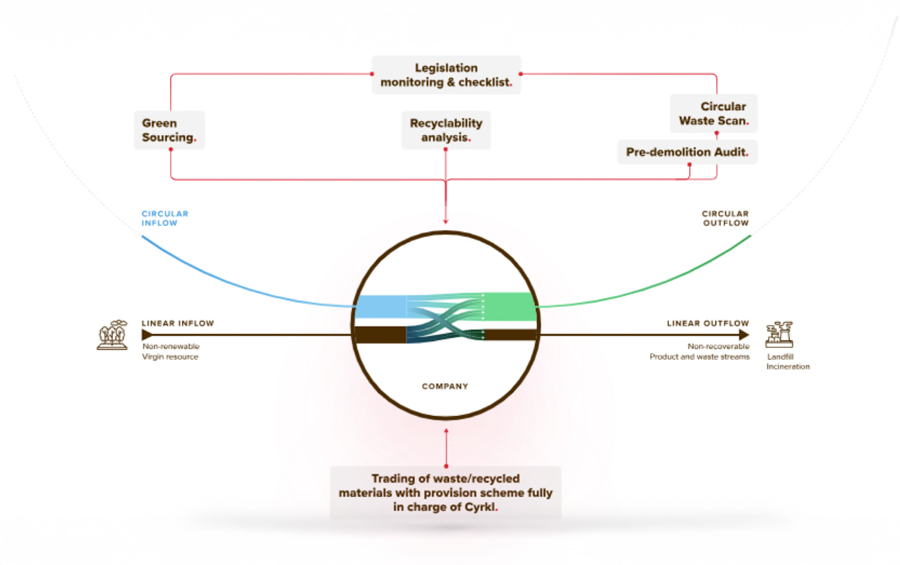
Cyrkl Waste Copilot is a comprehensive circular waste management service designed for manufacturing and industrial enterprises in the Czech Republic and broader Central Europe.
It functions as a strategic partnership combining expert consultancy with operational hands‑on training. The service supports companies in optimizing waste logistics, enhancing documentation and compliance with EU and national regulations, and transitioning toward a zero‑landfill, closed‑loop waste model. Participants gain direct training in implementation of circular practices—such as detailed waste stream analysis, recycling partnerships via Cyrkl’s marketplace, cost‑saving strategies (typically 10–30 %), and transparent reporting aligned with ESG goals. Over the course of engagement, companies acquire both the know‑how and digital workflows needed to scale circular waste systems internally, supported by ongoing expert mentoring.
Source: CYRKL Zdrojová platforma, s.r.o.
Circular Academy
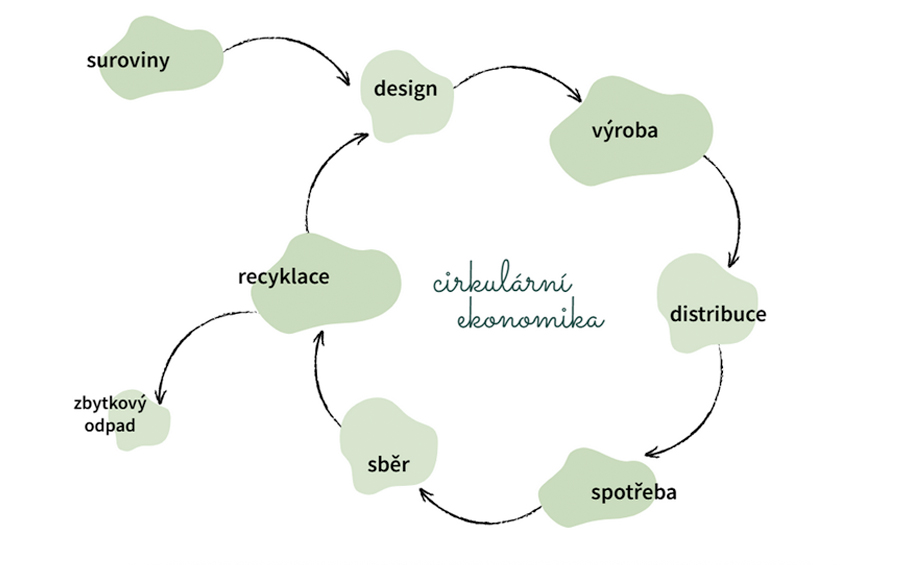
Circular Academy – Course I is a training program focused on supporting companies in the practical implementation of circular economy principles
Participants gain tools to identify and apply circular solutions in material flows, water, and energy management, including water and energy audits. The program combines theory with practice through workshops, excursions, case studies, and the use of tools for measuring impacts and the effectiveness of applied measures. The goal is to enhance business competitiveness through sustainable and measurable strategies and support the transformation of Czech industry towards a circular economy. The training is intended for SMEs, municipalities, and large companies alike.
Source: CIRA Advisory s.r.o.
SMEs ready for future - Transformation programme for your company!
Specific problem - Many CE firms do not yet have sufficient capacities to adopt new concepts and models as they lack know-how, human capital, best examples as well as organizational and managerial capacity.
According to Flash Eurobarometer 486 “SMEs, start-ups, scale-ups and entrepreneurship” among EU SMEs' biggest problems are lack of skills, incl. managerial 17% (out of 12.343 SMEs); difficulties with digitalization 13% and innovation 9%, internationalization 8%. In such challenging circumstances, efficient and effective support is needed, which will allow SMEs to transform their organizational culture and business models, become more resilient to further challenges and to adapt changing conditions in terms of a digitalized and greener economy.
Idea - There is need for SMEs to effectively transfer and adopt new market and social -driven concepts and models will be addressed by focusing on 4 Pillars oriented on: innovation culture, digital manufacturing, open innovation & sharing economy, green & circular economy & sustainability.
Solution - Lack of know-how, human capital and organizational & managerial capacity in introducing new concepts & models will be reduced by providing Inspiration Knowledge Base together with webinars on 4 pillars topics, trainings for SMERF mentors, SMERF Trainings, SMERF Individual Support Program, study visits and SMERF Handbook.
https://www.interreg-central.eu/projects/smerf/

Training programs
The Green Path Academy is a course, part of the Greene 4.0. Project (Interreg Central Europe Programme), which serves as a quick-start guide for leaders and employees of small and medium-sized enterprises (SMEs).
It provides essential knowledge and tools to help understand and implement digital and green transformation effectively. It consists of 5 modules, each addressing a key area of transformation for SMEs: Navigating Digital Transformation in SMEs; Smart Manufacturing and Open Innovation Toolkit Mastering; Digital Manufacturing and Open Business Generation & Operation; Green Industry Innovation and Sustainable Production Technologies; and Funding Gaps – Equity Investment Readiness & Private Capital Access.
Together, these modules equip SMEs with the foundational insights and practical approaches needed to drive sustainable growth, enhance competitiveness, and successfully navigate the shift toward a greener, more digital future.
Source: Greene 4.0 (Interreg Central Europe Programme).
Business Sustainability in the Circular Economy course
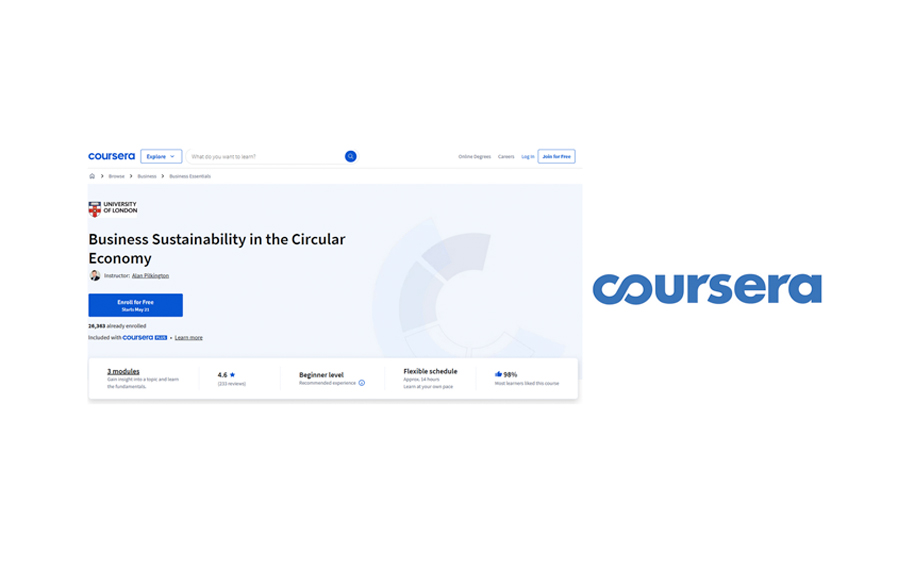
The Coursera course "Business Sustainability in the Circular Economy" delves into the principles of sustainability and their transformative impact on modern organizations.
It emphasizes the shift from traditional linear models to circular approaches aimed at reducing waste and enhancing recycling efforts.
Participants will gain insights into how businesses can integrate circular economy concepts to foster environmental responsibility and economic resilience. The course offers practical knowledge on implementing sustainable practices that not only benefit the environment but also drive innovation and competitiveness within organizations.
Designed for professionals and students alike, this course equips learners with the tools to critically assess and apply circular strategies in various business contexts. By the end of the program, participants will be prepared to lead initiatives that contribute to a more sustainable and circular economic future.
Source: University of London, a course available on the Coursera platform
The Circular Innovation Academy
SMART CIRCUIT project has developed an online e-learning platform for building digital and green skills for managers in key industries such as construction, ICT, electronics etc.
The Circular Innovation Academy is a blended online learning platform designed to deliver practical, sector-specific knowledge on circularity through eight expert-developed modules. These learning paths cover both technical and strategic aspects of the circular transition, with a strong emphasis on digital tools, smart manufacturing, and applied innovation.
Source: SMART CIRCUIT