Edible Packaging for Waste-Free Consumption

Waste Type:
Plastic
Main Circular Economy Strategy:
Design for Recyclability & Material Substitution
Company:
BreadPack
KEYWORDS
Sustainable Packaging; Sustainable Materials; Waste Reduction;

Summary:

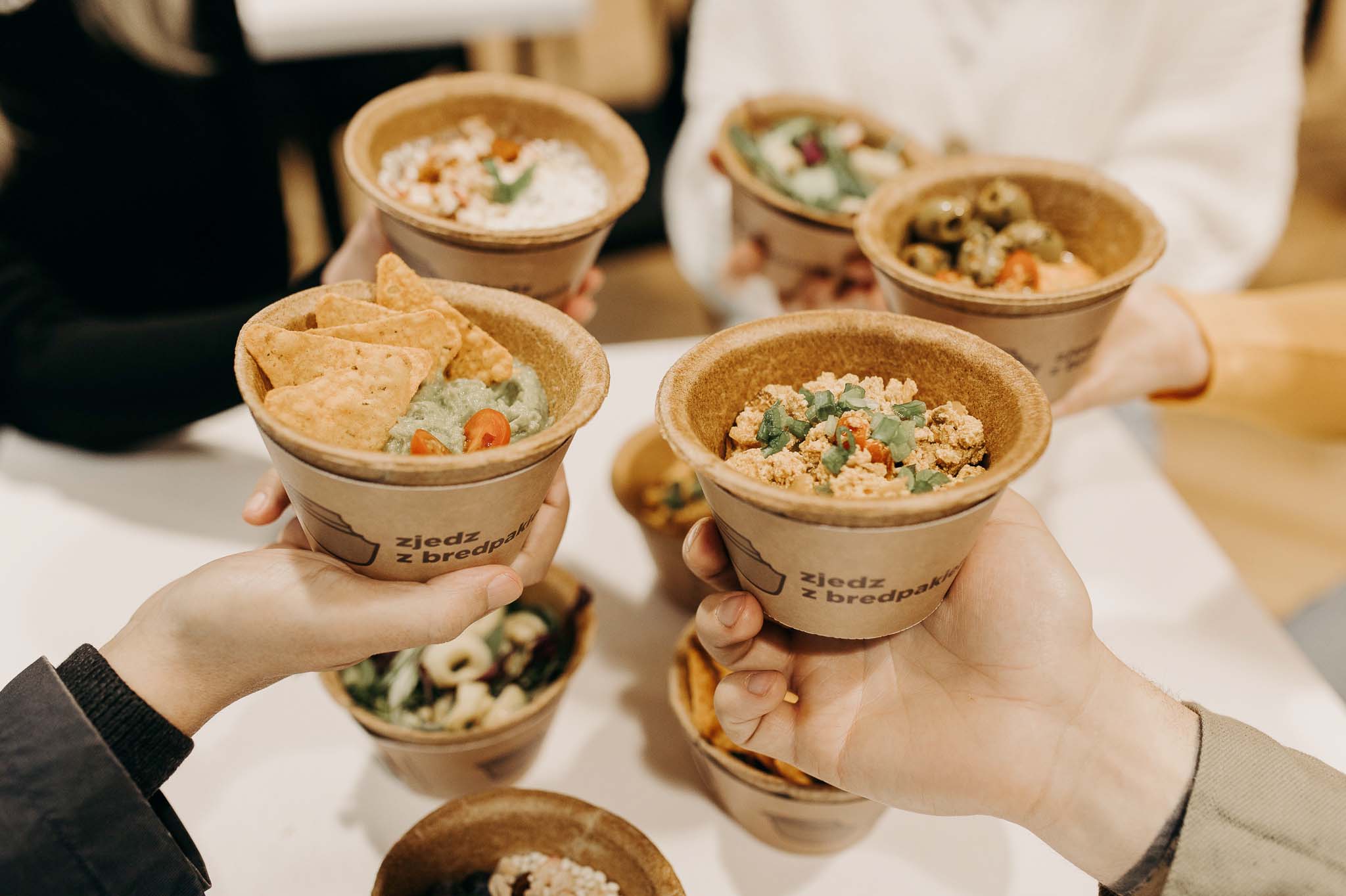
BreadPack, a Warsaw start-up, produces edible and fully compostable tableware from grain-based ingredients, including surplus bakery materials, offering a zero-waste alternative to single-use packaging. Their solution allows containers to be eaten or composted, effectively closing the loop at the point of use.

Description

BreadPack, a Warsaw-based start-up founded in 2018, has developed a novel circular solution to tackle single-use packaging: edible and fully compostable cups, bowls, and tableware made from grain-based recipes. Initially born from innovation within a vegan restaurant, the solution grew into a full-scale commercial product by 2020. These edible containers are designed to hold hot or cold food, resist leaking, and be either eaten or composted after use—completely eliminating packaging waste. The company’s formula uses locally sourced rye flour, bran, and even surplus bakery material, linking their approach to the bio-circular economy by valorizing food by-products. BreadPack’s packaging directly replaces disposable items such as coated soup bowls, plastic lids, and compostable plastics. Their innovation responds to growing demand from restaurants, cafés, and eco-conscious events for zero-waste food service options. By transforming packaging into a consumable product, BreadPack closes the loop at the point of use—offering a powerful visual and practical example of a circular product that never becomes waste.

Environmental Perspective

Environmentally, BreadPack’s edible packaging achieves full circularity: it leaves no waste behind, whether consumed or composted. A café using 10,000 edible cups per year avoids the same number of single-use plastic or paper containers, reducing landfill inputs by hundreds of kilograms annually. The products are 100% biodegradable and home compostable, and production uses renewable agricultural inputs, which reduces reliance on fossil fuels used in plastic production. The product also has a lower carbon footprint, thanks to the avoidance of energy-intensive processes associated with plastics and coatings. Unlike most packaging, BreadPack’s solution re-enters the food cycle, either biologically (as compost) or literally (as food). The use of bakery surplus further enhances circularity by reducing food waste upstream. Economically, BreadPack leverages low-cost grain materials and minimalistic production processes to compete with compostable bioplastics, while offering a distinct environmental advantage. For businesses, adopting BreadPack's solution can lower disposal costs (no waste bin or collection needed for consumed products) and improve branding by appealing to sustainability-minded consumers. Early adopters like cafés, eco-stores, and festivals have reported both positive customer feedback and moderate financial savings. Despite launching right before the COVID-19 crisis, BreadPack has weathered the startup phase. As demand grows, scaling production is expected to reduce per-unit costs, making edible packaging a realistic alternative for a wider range of clients.


Economic Perspective

Creating a food-safe, durable, and edible packaging product required extensive R&D and regulatory approval. Co-founded by a food scientist, BreadPack went through multiple prototypes to ensure shelf life, heat resistance, taste neutrality, and structural integrity. The product passed food safety certification by 2021 and launched with small-scale restaurant and event partners. BreadPack’s solution has enabled zero-waste catering at events, where consumers either eat or compost their dishware—no trash bins needed. One festival eliminated all single-use dishware waste by switching to BreadPack cups and bowls. The company continues to improve its designs (e.g. for better resistance to hot liquids) and has received recognition in Polish innovation contests for its circular economy contribution. A key challenge remains consumer behavior and trust: while many enjoy the novelty of edible bowls, others hesitate to eat packaging. BreadPack meets this challenge through taste-focused marketing, public demos, and storytelling about their environmental mission. Today, the company is looking to partner with larger food chains and explore licensing opportunities abroad. BreadPack represents a new generation of circular SMEs turning biowaste into sustainable business models—combining material innovation, ecological performance, and market viability in one product line.

  • Date
  • Client
  • Category
  • Share