
Precision Engineering and Material Optimization to Reduce Waste
Waste Type:
Main Circular Economy Strategy:
KEYWORDS
Summary
The core circular economy solution at this company is the integration of precision CNC machining and advanced cutting optimization software to reduce waste generation at the source.
Description
The company is a small, family-run precision machining workshop located in Murska Sobota, Slovenia. The company, led by a sole proprietor, offers CNC milling, turning, laser cutting, and component assembly services to clients across industrial sectors. Despite its small scale, the business operates with advanced technological capabilities and a clear focus on efficiency and sustainability. Recognizing that precision and material efficiency are key to both competitiveness and environmental performance, this company has adopted circular economy principles by optimizing raw material use and minimizing production waste.
The core circular economy solution at this company is the integration of precision CNC machining and advanced cutting optimization software to reduce waste generation at the source:
◼ Precision Manufacturing for Zero-Reject Output
The company uses computer-controlled CNC machines to produce parts to exact specifications, minimizing errors and eliminating the need for rework or scrapping. High-precision milling and turning ensure that each component is manufactured correctly on the first attempt. This drastically reduces defective parts and waste from misalignments, dimensional errors, or setup mistakes.
◼ Nesting Optimization in Laser and Sheet Cutting
When cutting components from sheet metal, the company uses software to “nest” part shapes as efficiently as possible—minimizing off-cuts and maximizing material yield. This reduces the amount of metal left as skeleton waste after cutting operations.
◼ Efficient Use of Bar Stock in Turning CNC lathe operations are programmed to use the maximum possible length of bar material, minimizing unused end pieces. The team also selects starting material sizes that closely match the final part geometry, reducing the need for excessive machining.
◼ Integrated CAM Software for Toolpath Efficiency Advanced CAM (Computer-Aided Manufacturing) systems are employed to calculate the most efficient toolpaths, reducing machining time, tool wear, and energy consumption. Optimized paths mean that only essential material is removed, with minimal scrap generation.
◼ Full Material Recovery via Scrap Segregation and Recycling
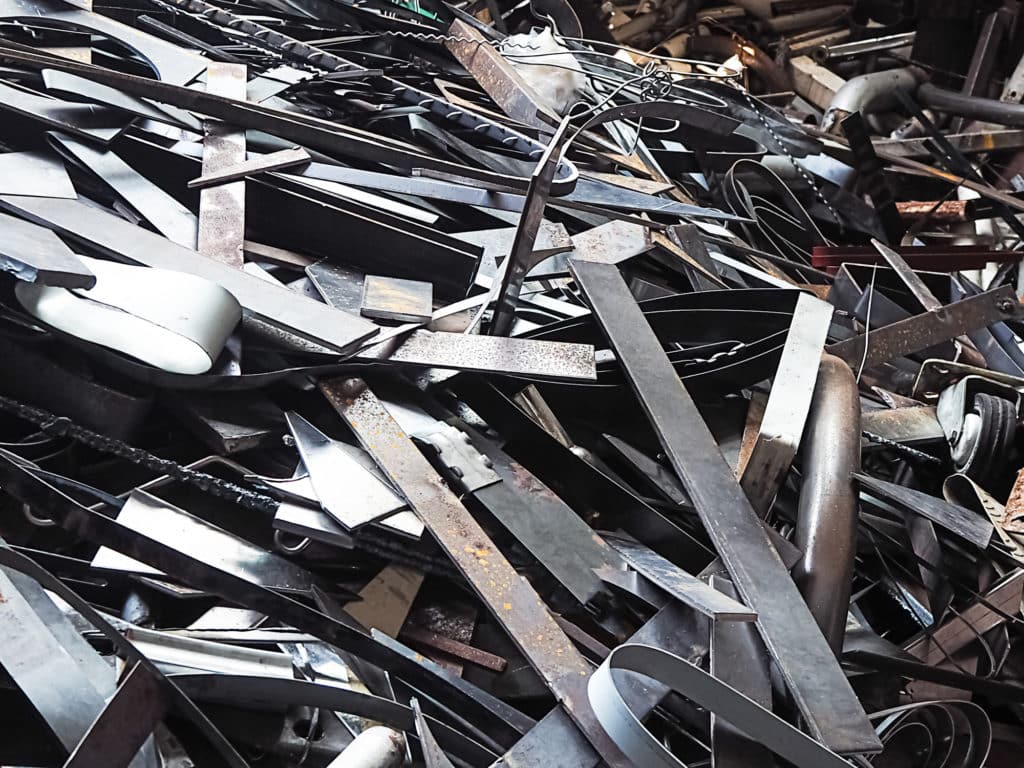
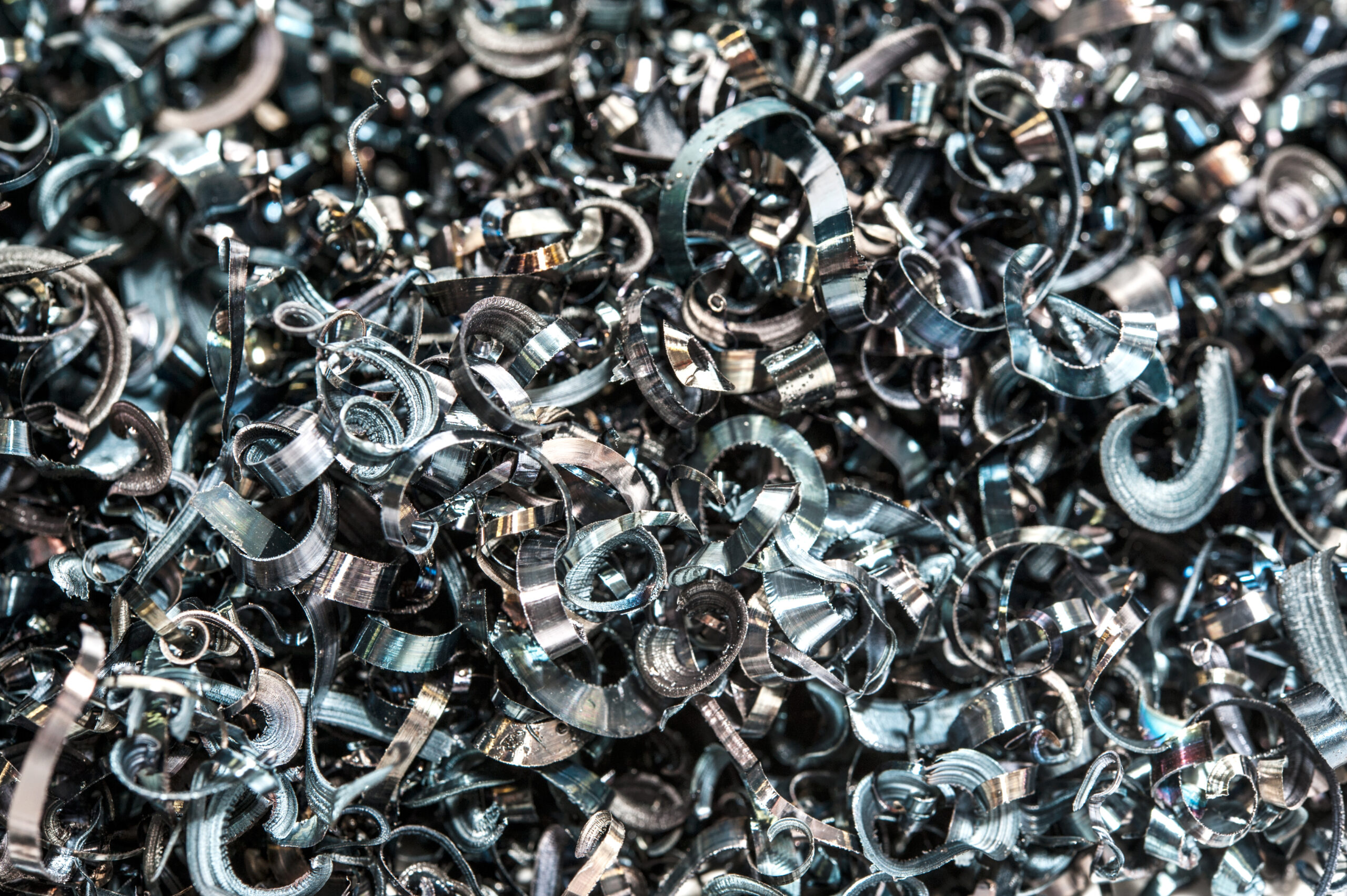
All metal chips and shavings from machining—whether from steel, aluminum, or brass—are collected in separate bins to ensure purity. These are sold to local metal recyclers, creating a closed-loop system where all non-product material is recovered for remelting and reuse.
Oro Met has adopted a circular economy strategy focused on Design for Recyclability. Every component it manufactures is designed to be fully recyclable at end-of-life, without residual waste. The key elements of this strategy include:
Monomaterial Construction: Products are made almost exclusively from high-grade tool steel, without embedded non-metallic inserts. Auxiliary components (like pins or clamps) are removable and made from compatible metals.
Avoidance of Recycling-Inhibiting Coatings: Products are free from hazardous coatings or non-metallic layers. Heat treatment is used for hardening, but surface finishes do not interfere with end-of-life recycling.
Standardized Grades and Sizes: Plates are produced in standardized dimensions using common steel alloys. This simplifies material sorting and ensures compatibility with existing recycling streams.
Internal Scrap Recycling: Oro Met captures 100% of its production scrap (chips, offcuts) and returns it to the SIJ steelworks for remelting. This internal closed-loop system minimizes waste and maximizes resource efficiency.
Facilitation of External Recycling: Oro Met’s products are designed for easy identification and processing by scrap dealers. While not a formal take-back scheme, the company encourages and enables clients to return or resell used plates into the recycling market.
Environmental Perspective
The environmental benefits of the company's approach are derived from preventing waste at the point of generation and ensuring all unavoidable scrap is recycled:
◼ Minimized Scrap Generation: High CNC accuracy means minimal defective parts and less excess material removal. This reduces overall metal throughput, directly lowering the environmental impact tied to mining, refining, and transporting raw materials.
◼ High Recycling Rate of Clean Metal Waste: Since machining operations use single-metal inputs, the resulting chips and off-cuts are uncontaminated and ideal for recycling. Nearly all non-product material generated in the workshop is recycled, rather than landfilled.
◼ Reduced Energy Use in Machining: Optimized toolpaths and error-free machining reduce total machine run-time, cutting energy use per part. In turn, this lowers indirect CO₂ emissions associated with manufacturing operations.
◼ Prolonged Use of Machined Assemblies: High-quality, accurately machined parts fit better and function more efficiently within final products (e.g., machinery or tools), potentially extending their service life and reducing the frequency of replacement cycles—an often overlooked sustainability benefit.
◼ Efficient Resource Allocation: The company’s lean manufacturing model demonstrates how resource-intensive industries can achieve circularity not just by recycling but by using fewer resources from the start, effectively decoupling value creation from raw material input.
Economic Perspective
The company's strategy also provides measurable financial advantages, enhancing business resilience and competitiveness:
◼ Reduced Material Costs: Improved material utilization through nesting and smart stock selection lowers the volume of raw metal purchased. Higher yield from each sheet or bar directly reduces input costs—essential for small workshops with tight margins.
◼ Improved Productivity and Throughput: First-pass success in CNC machining reduces rework and machine downtime. This allows for more jobs to be processed in less time, increasing output capacity without additional equipment.
◼ Revenue from Recyclable Waste: While not a primary income stream, segregated scrap metal is sold to recyclers, creating a small but steady revenue and eliminating disposal costs.
◼ Tooling and Maintenance Savings: Optimized machining processes extend tool life and prevent machine wear or breakage. Reduced tool changeover and maintenance save costs and improve production reliability.
◼ Attraction of Eco-Conscious Clients: In an increasingly sustainability-oriented manufacturing ecosystem, efficient material use and recycling practices help this company's appeal to clients with environmental standards or ISO 14001 goals.
◼ Eligibility for Funding or Certification: Demonstrating a circular economy approach can enhance the company’s eligibility for regional or EU sustainability funding, innovation vouchers, or certifications—especially important for SMEs seeking support in adopting green manufacturing.